Miami vs West Palm Beach: The Most Honest South Florida Real Estate Comparison You Will Read
Most people think South Florida means Miami. And for a long time, that assumption was close enough to correct that it did not matter much. But something has been happening over the past several years that a significant portion of buyers evaluating this market are genuinely missing — and missing it is an expensive mistake.
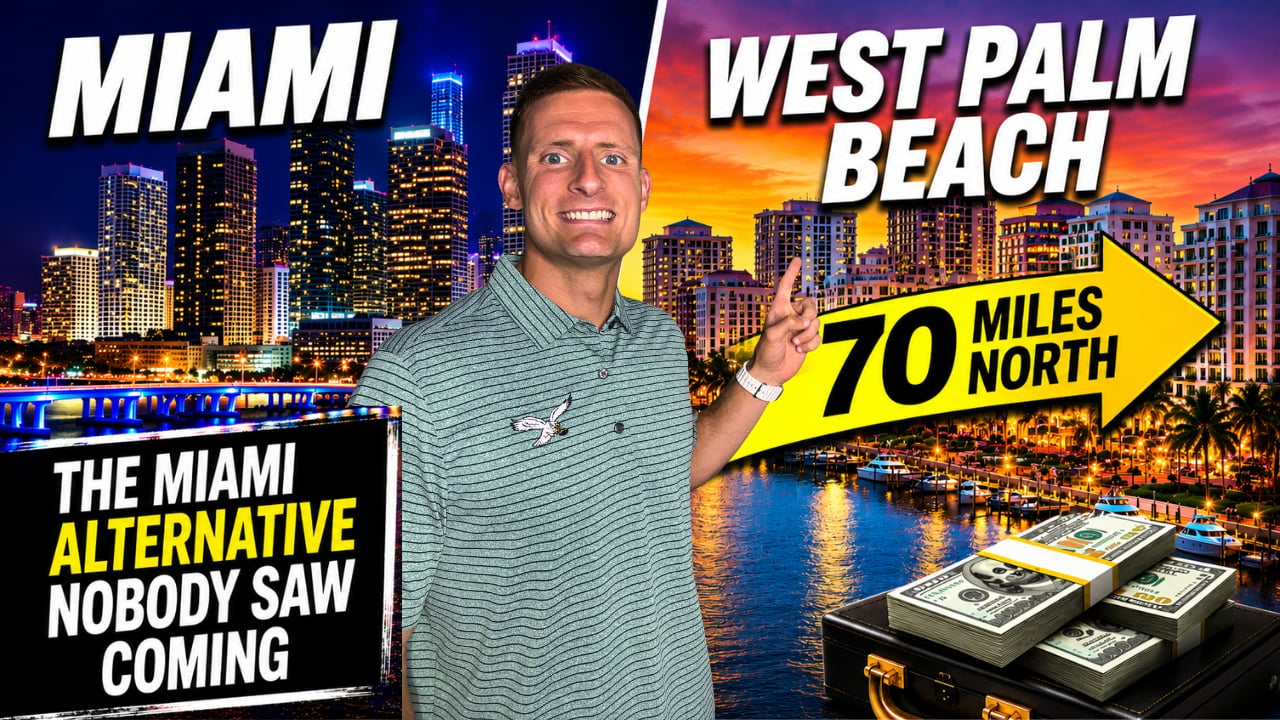
The same hedge funds, the same finance executives, the same Northeast money that everyone assumed was headed straight to Miami? Some of the smartest of it went 70 miles north instead. To West Palm Beach. And that changes the entire conversation about where to buy in South Florida right now.
I'm Joe Vairo — a 2x eXp ICON Agent, ranked the #3 real estate agent in Fort Lauderdale by Fort Lauderdale Magazine, and founder of the Vairo Group, ranked the #3 real estate team in Fort Lauderdale. I cover Miami, West Palm Beach, Fort Lauderdale, and the entire South Florida corridor every day. This is the most honest version of this comparison I can give you — five categories, a real scorecard, and a clear answer on which city is right for which buyer. No fluff and minimal "it depends."
How This Conversation Started: 2019, 2020, and the Migration That Changed Everything
To understand why Miami versus West Palm Beach is even a real conversation, you have to go back to 2019 and 2020 — the period that permanently changed where wealthy people decided to live.
For the first time, a managing director at a hedge fund did not have to be in Midtown Manhattan. A partner at a private equity firm did not have to endure Chicago winters. When those people started asking where they actually wanted to live and raise their families — if geography was no longer a professional constraint — a significant number of them landed on the same answer: South Florida.
No state income tax. No real winters. A dollar that goes meaningfully further than in the markets they were leaving. The migration started, and at first it all went to Miami. Citadel moved its headquarters from Chicago to Brickell. Goldman Sachs expanded in Brickell. Ken Griffin bought a massive estate on Indian Creek. Miami was getting all the headlines, all the attention, and for a while, essentially all the money.
Then Miami got expensive. It was already expensive, and it got expensive fast. The people who moved early got in at the right time. As more firms and more capital followed, the cost of doing business in Miami — office space, housing, cost of living — started climbing. And a different conversation started happening at a lot of these firms and families: what about Palm Beach County?
Palm Beach Island has always been where old money lives. The Kennedys, generations of family offices and private wealth parked on that island for decades — and they never crossed the bridge to downtown West Palm. Same water, same weather, same access to that network, at a fraction of Palm Beach prices. When financial firms started recognizing that, downtown West Palm started transforming. Smaller hedge funds that could not justify Miami's overhead set up operations there. And a city that had been genuinely overlooked for years started changing almost overnight.
That is why this conversation matters right now. Two legitimate financial markets, 70 miles apart, both on the water, both growing — and depending on which one you choose, you are making a very different financial and lifestyle decision.
The Case for Miami
The case for Miami is not hard to make. Brickell is one of the most exciting urban cores in the country right now. A legitimate financial district, world-class restaurants, walkability that no other Florida city approaches, and an international energy that is completely unique. If you spent time in New York or Chicago and you need that density, that big city feel and pace — Brickell and downtown Miami scratch that itch in a way nothing else in South Florida does.
The infrastructure is real. Miami International Airport is one of the busiest and most connected in the country with direct flights essentially everywhere. The corporate ecosystem built over the past five years — banks, law firms, family offices, tech companies — is not going anywhere. If anything it is still growing.
And then there is the lifestyle. Miami is Miami. The beaches, the nightlife, the dining scene, the art, the culture, the Latin American and international influence that makes the city feel like nowhere else in the world. If you want to be at the center of all of that — no other Florida city delivers it.
The catch is that the market knows all of this. Every advantage I just described has been priced in. A luxury condo in Brickell runs from the low $1 millions up to $2 to $3 million. A single-family home in Coral Gables or Coconut Grove starts around $2 million. Waterfront in Miami Beach starts at $3 to $5 million and goes well beyond that. You are not buying early in Miami anymore. That window closed.
What you are buying into is a mature, established, world-class market — and you are paying world-class prices for it. For buyers coming from New York or Boston who are used to paying a premium to be in a premium city, that equation makes complete sense. The question is whether there is a smarter entry point into South Florida right now.
The Case for West Palm Beach
If you have not been to West Palm Beach recently, the version you have in your head is wrong. The quieter, slower alternative to Miami that people described five years ago is not what West Palm looks like today. Downtown West Palm — Clematis Street, Rosemary Square, Flagler Drive waterfront — is transforming in real time. New restaurants, new hotels, new towers, new office space. It feels like a city that got the memo and is moving very fast.
But here is what makes West Palm Beach different from just another Florida city with cranes downtown: the bridge. Palm Beach sits directly across the Intracoastal from downtown West Palm, and Palm Beach is one of the wealthiest zip codes in the entire country. Generational money — estates, private clubs, family offices, private bankers — has been parked on that island for over a century. Those people are finally coming across the bridge.
West Palm Beach is not attracting serious financial infrastructure because it is trying to be the next Miami. It is attracting it because it sits next to something Miami can never replicate. You cannot move Palm Beach 70 miles south. It has been there for a century and it is not going anywhere.
On the real estate side, luxury condos in downtown West Palm on the new construction side run from the low $1 millions up to approximately $40 million for the most premier waterfront product. Waterfront single-family homes range from roughly $1.5 to $4 million depending on street and square footage. Compare that directly to Miami's numbers and the gap is meaningful — and it has not closed yet.
The buyers getting in now are getting in before the full infrastructure is built, before the financial migration has fully matured, and before the price gap between West Palm and Miami compresses to its eventual equilibrium. That is a specific and time-sensitive opportunity.
The Development Pipeline: Where the Real Money Is Going
Developers do not speculate with hundreds of millions of dollars. They study population trends, job growth, income levels, and infrastructure investment — and then they write the check. The development pipeline in both cities tells you exactly where those markets are heading over the next five to ten years.
In Miami, the Waldorf Astoria Residences Miami is under construction downtown — 100 stories, one of the tallest residential towers south of New York City when completed, with entry prices around $1.1 million and penthouses topping $50 million. One Brickell City Centre is expanding with a second phase, with Swire Properties doubling down on what they already built after watching the first phase perform. On the beach side, ultra-luxury development continues reinforcing Miami Beach as a global second-home destination drawing buyers from Brazil, Argentina, Europe, and the Middle East. Miami's development pipeline is vertical — luxury stacking on top of an already built-out city, moving up because that is the only direction left.
In West Palm Beach, One Flagler is probably the most important single building in the market right now and most people outside of South Florida have never heard of it. A landmark waterfront office tower on Flagler Drive, purpose-built for the financial services firms that have been migrating here — not a speculative bet hoping tenants show up, but a building constructed because the demand was already there. Then there is South Flagler House, being developed by Related Ross — Steven Ross, the developer behind Hudson Yards in New York, one of the most credible development minds in the country. Two towers, Intracoastal views, price points from $5 million to over $20 million. The fact that Related Ross chose West Palm over Miami for this project says everything about where they see the trajectory. West Palm is building the bones of a financial city largely from scratch. Miami is adding luxury on top of luxury. Those are fundamentally different development stories.
The Scorecard: Five Categories, Honest Takes
Category 1 — Price and Value: West Palm wins. Miami is a mature market. The appreciation has already happened for most of it. You are buying at a high floor with limited upside at the entry level. West Palm gives you more square footage, more waterfront access, and more runway for appreciation at comparable price points. If the decision is purely financial — where does your dollar go furthest today and grow most over the next five to ten years — West Palm wins this category clearly.
Category 2 — Business and Career Infrastructure: Miami wins. This is the most honest call on the scorecard. Miami's corporate ecosystem in Brickell and downtown is deeper, more established, and more connected to global capital than anything in West Palm right now. If your career requires you to be physically present in a major financial hub — in the room, not remote, not hybrid — Miami is still the answer. West Palm is growing fast and the firms moving there are real, but Miami's depth took 30 years to build and West Palm is five to seven years into that journey. The gap is narrowing. It has not closed.
Category 3 — Lifestyle: Depends on who you are. If you are in your 30s, want the energy and nightlife, the international culture, and the feeling of being at the center of everything — Miami is not even a competition in Florida. No other city touches it on pure lifestyle depth and energy. But if you have a family, if you are coming from a quieter Northeast market, and your ideal Saturday involves the farmers market and being out on the water rather than a rooftop bar — West Palm is genuinely a better fit. Less congested, more outdoor-focused, more livable on a day-to-day basis for a specific type of buyer. Neither answer is wrong. They serve different people.
Category 4 — Long-Term Appreciation Outlook: West Palm wins. Miami is a strong market that is not going anywhere. But when a market is globally recognized and already priced at a premium, the ceiling for future appreciation is lower than a market still establishing itself. West Palm has more room to grow. The infrastructure investment is real, the developer conviction is real, and the financial migration story still has significant runway. If you are buying today and holding for 10 to 15 years, you want to be in the market with the higher growth ceiling. Right now that is West Palm.
Category 5 — Cost of Living and Day-to-Day Expenses: West Palm wins narrowly. Both cities are in Florida — no state income tax either way. But when you get into the details — insurance costs, HOA fees in luxury buildings, dining, parking, general monthly overhead — Miami runs consistently higher across the board. Not dramatically in every category, but consistently, because it is more built out. Over the course of a year it adds up. West Palm is less expensive on a day-to-day level right now, though that gap will likely compress as the market matures.
Final score: West Palm 3, Miami 1, one draw. But the draw — lifestyle — is often the category that makes the actual decision for most buyers.
Who Should Buy in Miami
You should buy in Miami if you are in finance and need to be physically present in Brickell every day. If international travel is a core part of your life and you need MIA's direct flight access to Europe, Latin America, and Asia. If nightlife, dining, and urban density are non-negotiables and you need that big city energy to genuinely feel at home. And if liquidity matters — when it is time to sell, Miami's resale market is as deep and fast as anything in South Florida.
Who Should Buy in West Palm Beach
You should buy in West Palm Beach if your work is remote or hybrid and you want the South Florida lifestyle without Miami's overhead. If waterfront access and maximizing what you get for your dollar are priorities. If you are playing a longer game and long-term appreciation matters more than the immediate prestige of a Miami zip code. If the Palm Beach network — family offices, private wealth, old money relationships, world-class golf — is relevant to your business or lifestyle. And if you have a family or are coming from a quieter Northeast market and want a more livable day-to-day environment.
The Third Option Nobody Talks About: Fort Lauderdale
I would be doing you a disservice if I did not put this on the table, because it is the option that gets left out of the Miami versus West Palm conversation almost every time — and leaving it out is a meaningful omission.
Fort Lauderdale sits almost exactly between both cities — 30 miles from each, Brightline-connected to both, 30 minutes in either direction. It gets overlooked constantly, and I would argue that overlooked status is one of the primary reasons it remains one of the best value plays on the water in all of South Florida.
The Venice of America nickname exists because Fort Lauderdale has more miles of navigable waterways than any other city in the country. A boating culture that is completely unique. A downtown that has been quietly improving for years. Waterfront real estate that still has significant room relative to both Miami and West Palm at comparable product quality. And a lifestyle that genuinely combines the best elements of both cities without the extremes of either.
I know this market better than almost anyone. And the buyers who come from New York, Boston, and Chicago — when they actually spend time in Fort Lauderdale and see what is available at what price point — a significant number of them end up here instead of where they thought they were going to land. That pattern is not accidental. It reflects something real about what this city delivers for the right buyer.
The Bottom Line
Miami is a world-class city priced like one. If you genuinely need what Miami offers — not just want it — it is worth every penny. West Palm is an emerging financial city with real conviction behind it, a development pipeline that does not lie, and a price gap relative to Miami that is closing but has not closed yet. The buyers getting in now are getting in at the right time. And Fort Lauderdale is sitting quietly in the middle of all of it, waiting for more people to figure that out.
The real answer is not which city is objectively better. The real answer is which city is right for you, your family, and where you are in your financial life right now.
Want Help Figuring Out Which Market Is Right for You?
I'm Joe Vairo with the Vairo Group. Whether you are leaning toward Miami, West Palm Beach, Fort Lauderdale, or somewhere else along this corridor — I can walk you through the honest, ground-level comparison that makes the difference between a decision you are confident in and one you second-guess for years.
📲 Text or call me at 954-830-1126 📩 Email me at [email protected] anytime — I respond personally
Joe Vairo is a 2x eXp ICON Agent, South Florida real estate agent, and Fort Lauderdale Magazine's #3 ranked agent in Fort Lauderdale. The Vairo Group, ranked the #3 real estate team in Fort Lauderdale, specializes in waterfront properties and luxury relocation in the $1M+ market.